

Turning Mission Into Momentum: UX and Content Strategy for a Food Equity Nonprofit
A ground-up website built to fundraise, tell a mission-driven story, and connect two underserved populations.
Product Designer
Figma, Affinity, Miro
1 Product Designer, 1 Graphic Designer, 1 Developer
Challenge
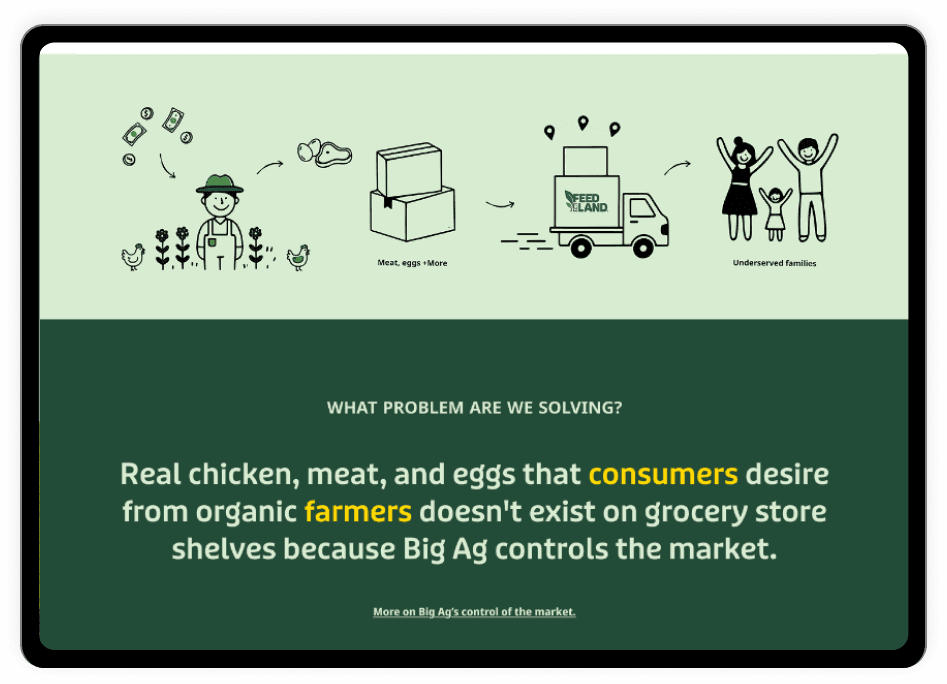
Feed The Land operates at the intersection of two at-risk populations — local organic farmers being squeezed out of the market by industrial agriculture, and families in underserved communities who have never had access to real, nutrient-dense food. The organization had a compelling story and a clear model, but no digital presence to match it.
The challenge was two-fold: make a complex, multi-beneficiary mission immediately legible to a first-time visitor, and build enough trust and clarity to convert that visitor into a donor. Without the right structure and copy, the depth of the mission risked getting lost — or worse, feeling too heavy for people to engage with.
Key gaps identified going into the project:
No existing website or brand voice guidelines to reference
A multi-pronged model (farmers + communities) that required careful framing to avoid confusion
A founder story and philosophy rich enough to anchor the brand, but needing editorial shaping
Donation conversion as a primary goal with no existing impact data to anchor donor confidence
Impact
The website established Feed The Land's digital foundation and gave the organization a credible, compelling home to grow from:
Gave the organization a clear, conversion-focused homepage built to drive donations
Distilled a multi-beneficiary mission into a narrative any visitor could follow in under a minute
Translated the founder's voice and philosophy into consistent, on-brand copy across all pages
Created a content structure flexible enough to grow as programs and impact data develop
Process
We started by establishing a brand, a voice and presence in the digital space. Working alongside a graphic designer and developer, I led the UX and content strategy for the project. I approached this as both a UX and content challenge. The intake brief made clear that Feed The Land had no shortage of ideas, passion, or philosophy — the work was in organizing it. I started by identifying the audience journey: who lands on this site, what do they need to understand, and what action do they need to feel ready to take?
From there, I mapped the site architecture around three core tasks: understanding the mission, building trust in the organization, and donating. Every page and section was written and structured to serve at least one of those goals.
The founder's voice was a throughline throughout. Johnny's personal story about long walks home from Food4Less and growing up without access to real food became the emotional anchor of the About page and shaped the brand's tone: clear, hopeful, direct, and never heavy-handed.
Branding
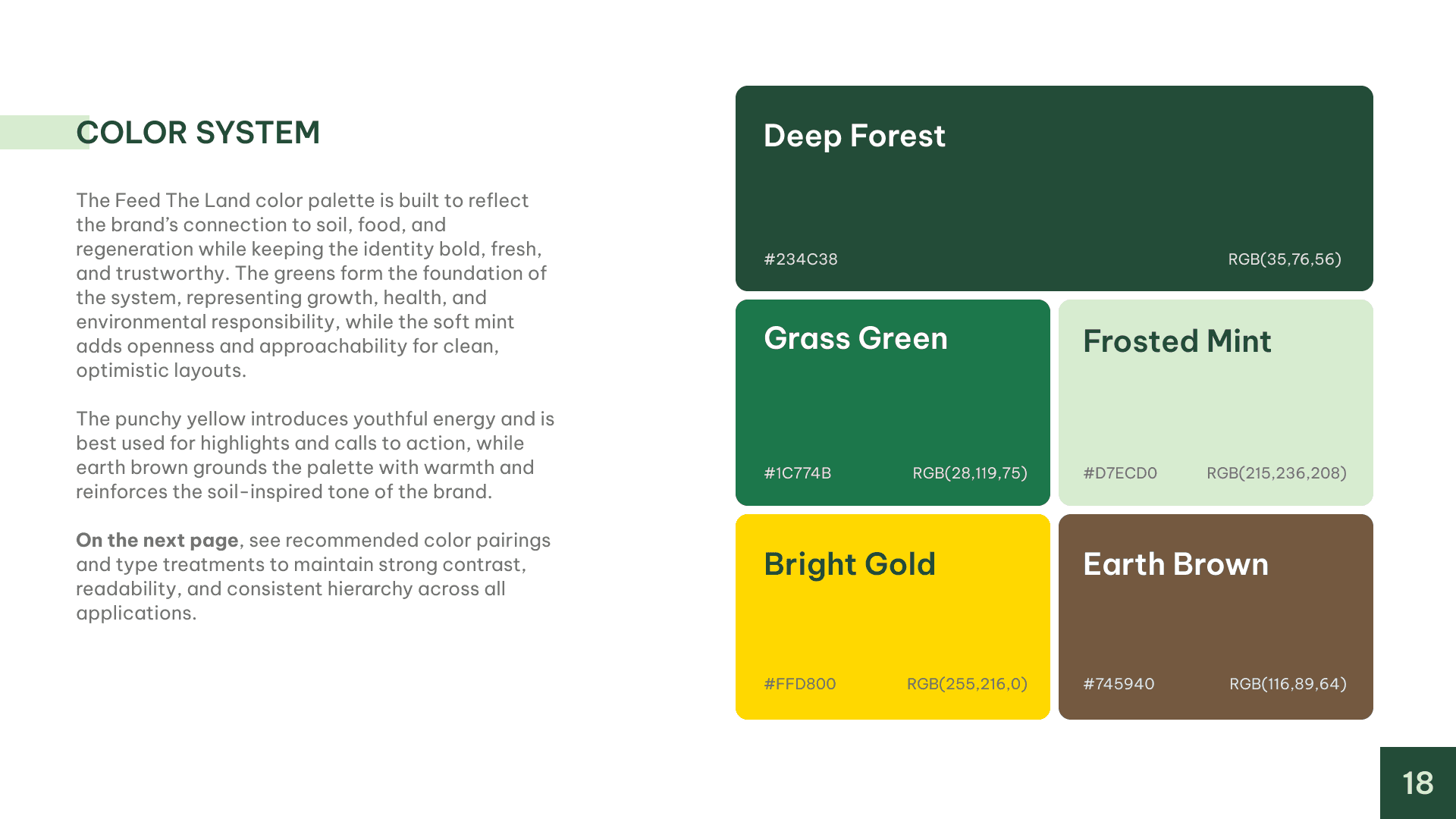
Before a single page could be written, Feed The Land needed a visual and verbal identity to build from. I collaborated with a graphic designer to establish the foundation, contributing to creative direction, shaping the brand voice, and reviewing iterations to ensure everything stayed true to the mission.
On the voice side, I led the work of translating the founder's philosophy into a consistent content language. Feed The Land had strong convictions — reciprocity, land stewardship, food as information — but needed a tone that could carry those ideas without feeling preachy or heavy.
The Solution
We transformed inconsistent interfaces into a guided, scalable experience supported by unified UX copy, reusable components, and documented standards.
Clear Mission Framing
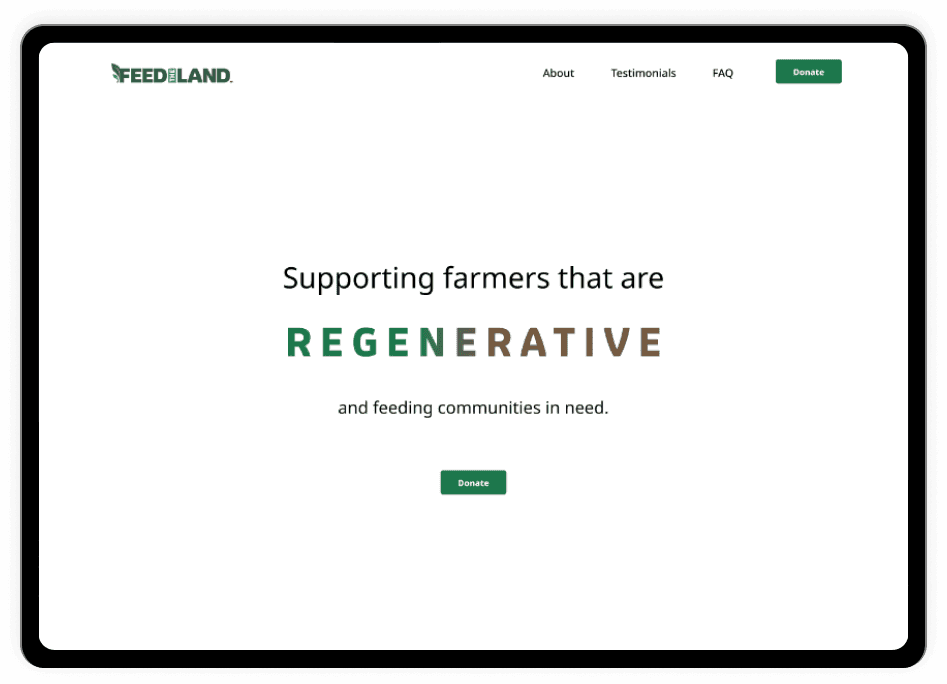
The homepage leads with a rotating headline, "We Back Regenerative Farming". The four words it rotates through is: regenerative, sustainable, organic, and local. Them it followed immediately by and feed those in need. This two-line structure does the work of the whole mission in seconds. The supporting copy breaks down the two-beneficiary model in plain language, so visitors understand exactly who Feed The Land serves and why both sides matter.
A Brand Voice Built on Clarity and Hope
Rather than leaning into urgency or guilt which are common nonprofit tropes, the copy strikes a tone of conviction and possibility. Phrases like Vote with your dollar and communities left behind by broken food systems were woven into the copy to reflect the founder's philosophy while staying accessible to a wide audience.
Founder Story as Trust Builder
The About page centers Johnny's origin story and the organization's guiding principles: Integrity, Listening, Execution. It gives donors a clear sense of who is behind the mission and why they're the right people to lead it.
Donor-Focused Structure
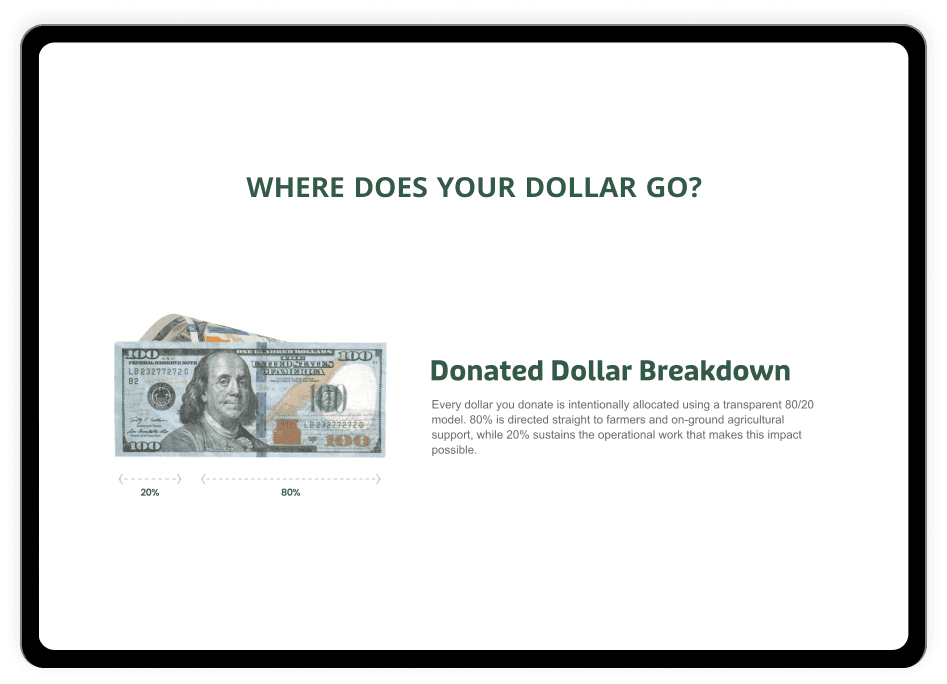
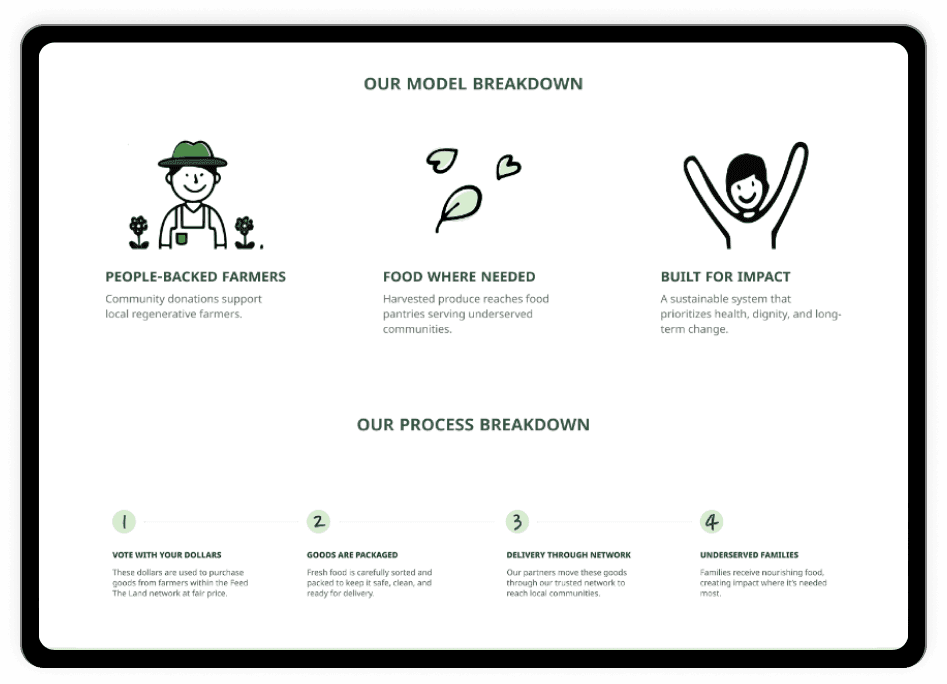
Every section of the homepage was written with conversion in mind. The How It Works section breaks the model into plain, concrete steps. The Impact section frames what a donation actually does — on a practical level and a systemic one — without requiring hard numbers the organization doesn't yet have.
Scalable Content Foundation
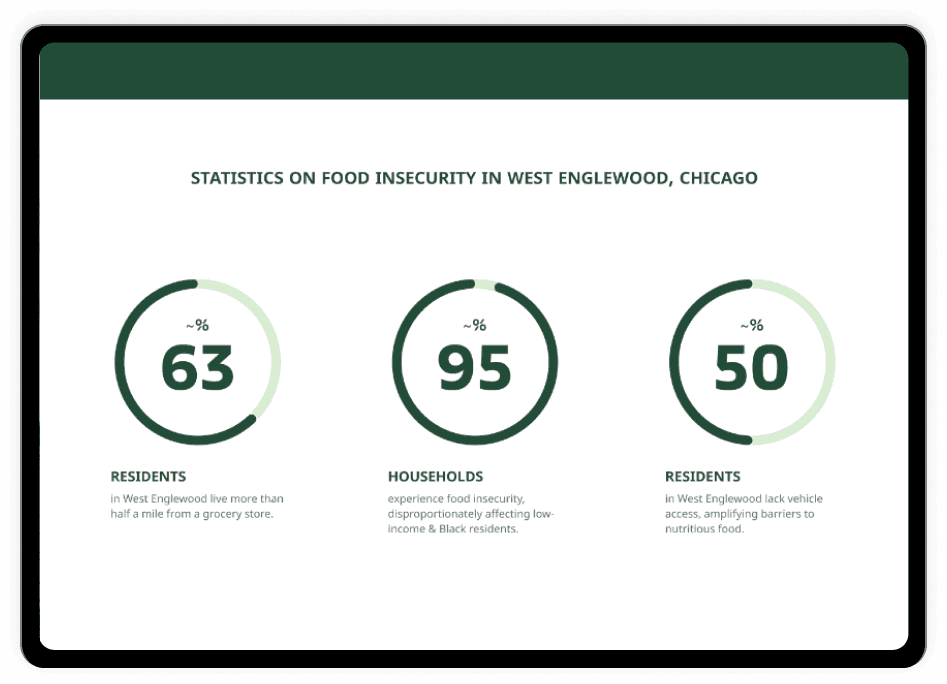
Sections for testimonials, impact stats, and FAQ answers were structured and written to be filled in as the organization grows. The site is built to evolve without requiring a full redesign.
Conclusion
Feed The Land came in with a mission that deserved to be heard and a story that deserved to be told well. This project was about creating the right container for both a site that earns trust quickly, communicates clearly, and gives every visitor a reason to act. By treating the content strategy and UX as one problem, not two, the result is a digital presence that reflects the depth of the mission without overwhelming the people it's trying to reach.