
Designing Consistency at Scale for a Fortune 500 Energy Organization
A Fortune 500 energy provider was consolidating multiple utility companies into one organization. Each operated with different systems, language, and design standards. This created risks for inconsistent and confusing customer experiences.

UX Designer and Copywriter
Figma, Miro
3 UXUI Designers, 2 Copywriters
Challenge
Three utility companies operated as separate organizations, with independently designed digital experiences, systems, and workflows. The transition toward a unified company surfaced gaps that risked customer confusion and inconsistency, while also presenting an opportunity to establish shared standards and improve the interface and experience at scale.
Our audit uncovered four key issues:
Outdated interfaces slowed users down
Inconsistent language created uncertainty
Design systems varied across teams
Documentation and governance were limited
Impact
The work established the foundation for a unified digital experience across the organization:
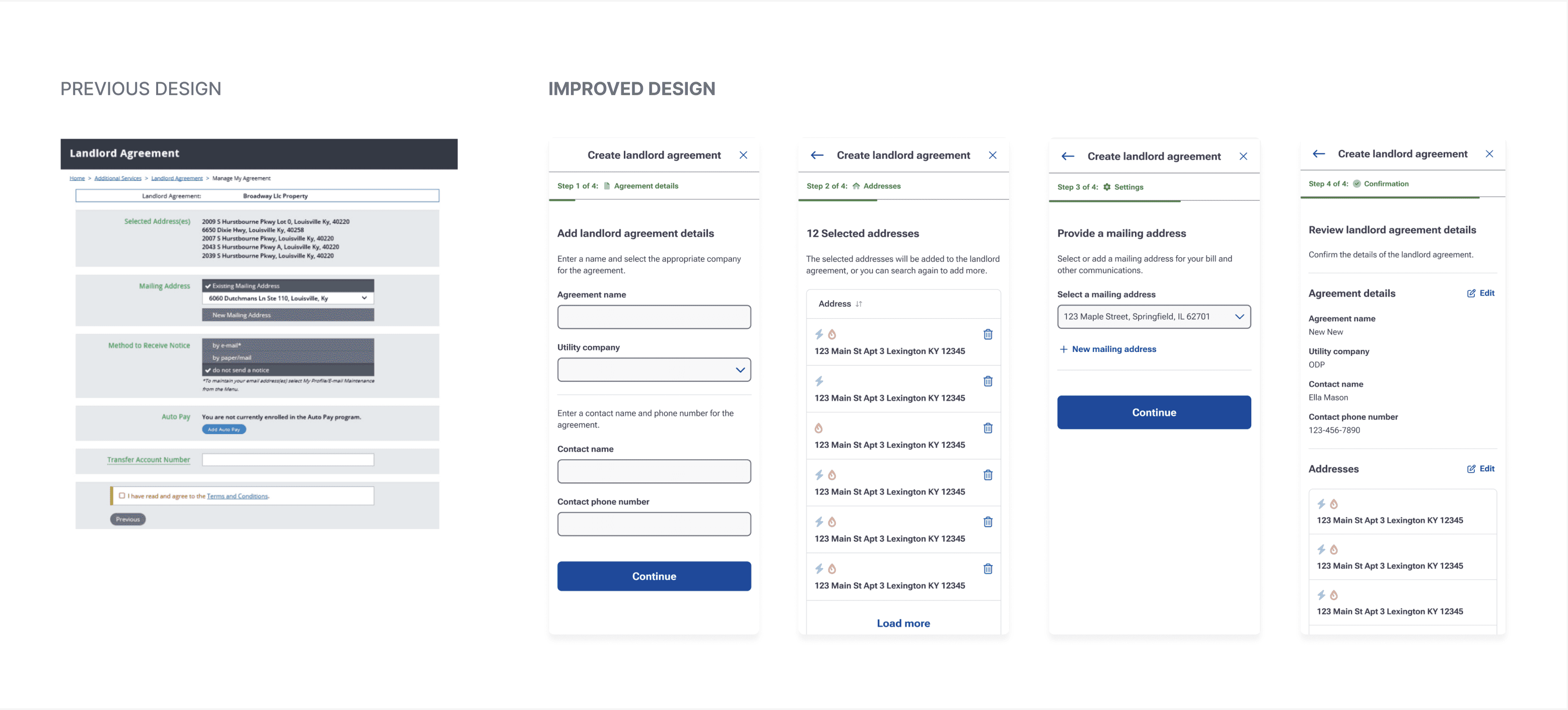
Enabled clearer, more guided task flows for customers
Aligned teams around a shared design and content language
Created scalable UX standards across products and platforms
Put governance in place to support consistency as the organization evolves
100+
Reusable Figma components created
50+
UX copy patterns standardized
10+
MVP features redesigned to be more intuitive
Process
My team and I approached the work by combining UX design, content strategy, and cross-functional collaboration. We focused on creating standards that were not only usable, but scalable and easy for teams to adopt.
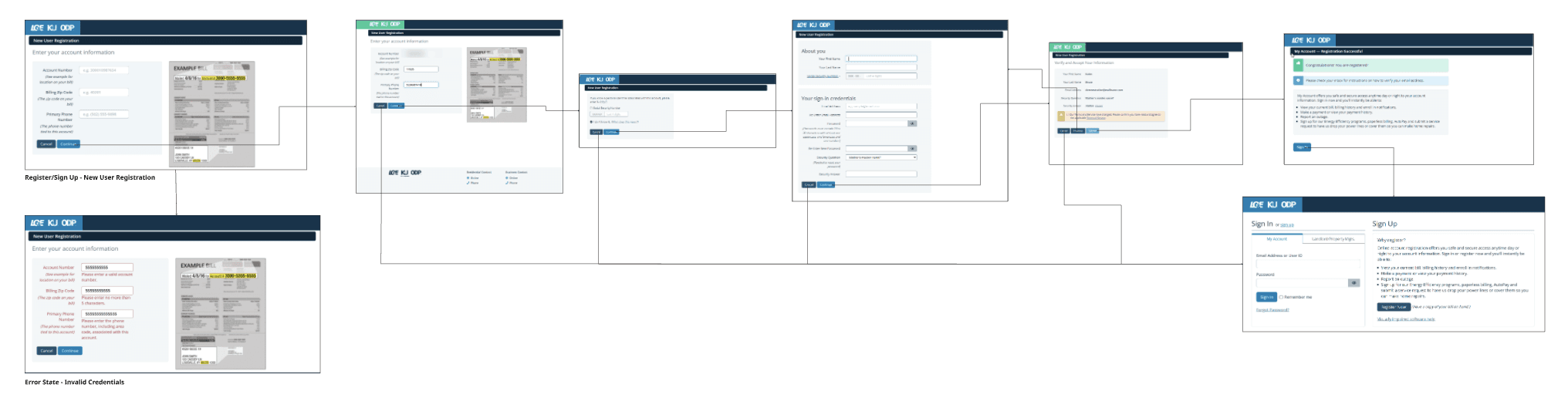
We began with a full audit of existing experiences, identifying inconsistencies in UI patterns, terminology, and workflow logic. From there, we aligned on principles that prioritized clarity, guidance, and accessibility.
The Solution
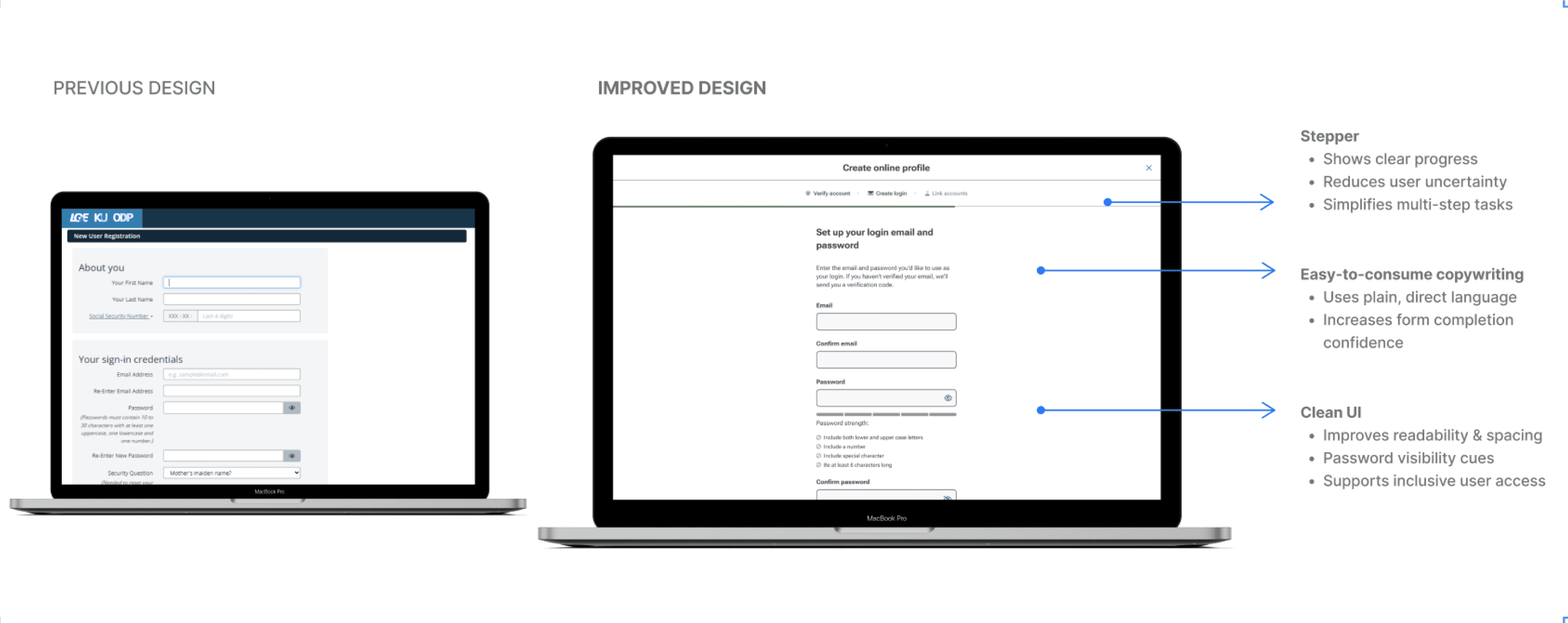
We transformed inconsistent interfaces into a guided, scalable experience supported by unified UX copy, reusable components, and documented standards.
Intuitive User Experience
Simplified complex workflows with step-by-step guidance
Reduced cognitive load through clear hierarchy, spacing, and grouping
Modernized outdated layouts to support clarity and task completion
Improved flow logic so users move through tasks with confidence
Clean User Interface
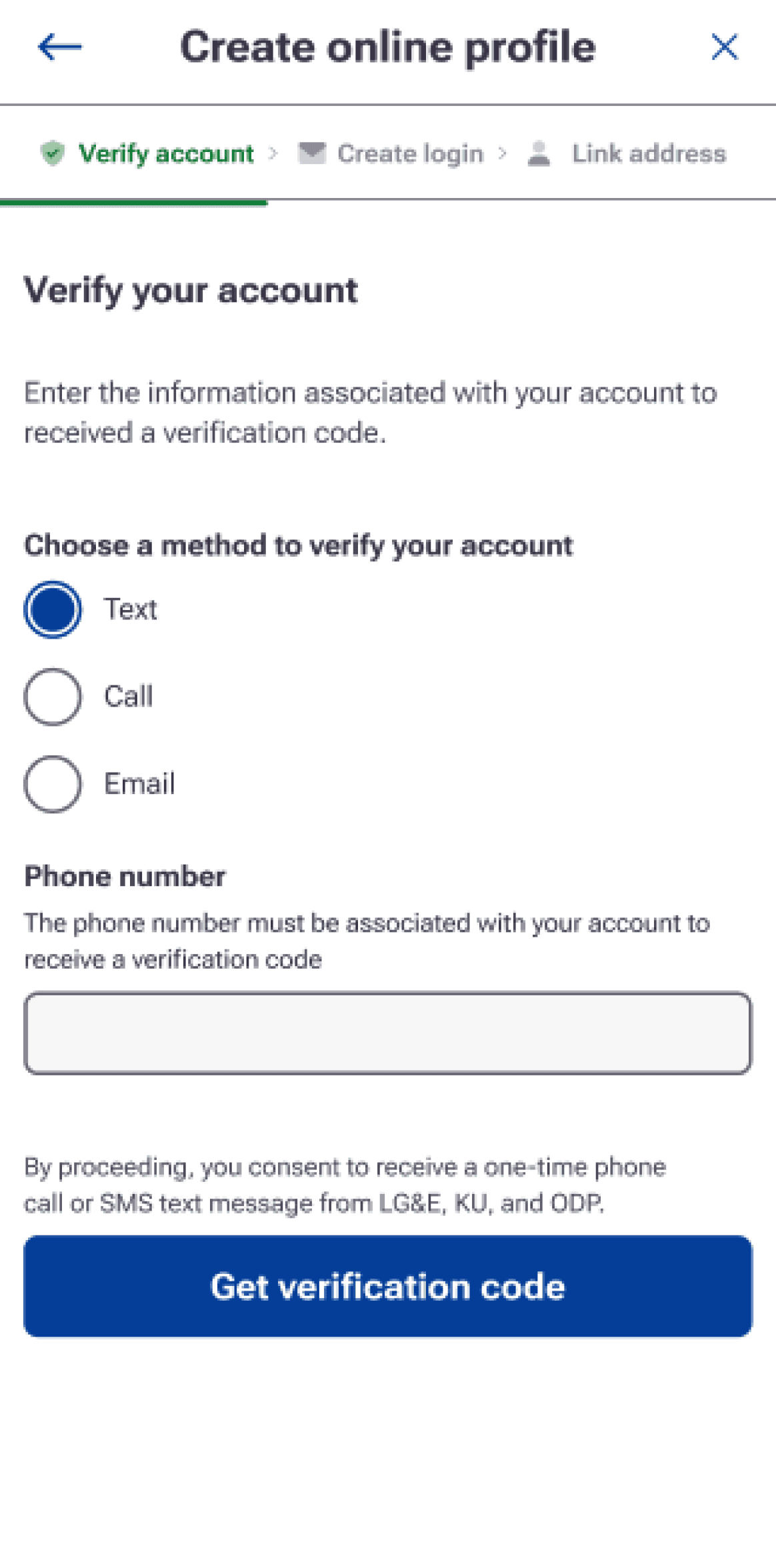
Introduced consistent, scalable UI components across products
Added steppers, progress indicators, and interactive cues
Improved readability through updated typography, spacing, and alignment
Enhanced accessibility with better contrast, clear labels, and input affordances
Improved Copy
Rewrote instructions, labels, and help text in plain, actionable language
Defined patterns for CTAs, errors, alerts, and form messaging
Ensured copy reinforced UX decisions, reducing uncertainty and errors
Established Governance and Documentation
Created the UX Writing Guidelines and Content Library with standardized patterns as a source-of-truth
Designed Figma component examples to show real-world usage and tone
Established rules for consistent component behavior across utilities
Conclusion
Rather than solving isolated UX issues, this work addressed the systemic challenges of scale, alignment, and consistency. By defining shared patterns, language, and governance, the project enabled teams to move forward with a unified approach and supports future product development within a complex enterprise landscape.