

Fitness Tracker for Mothers
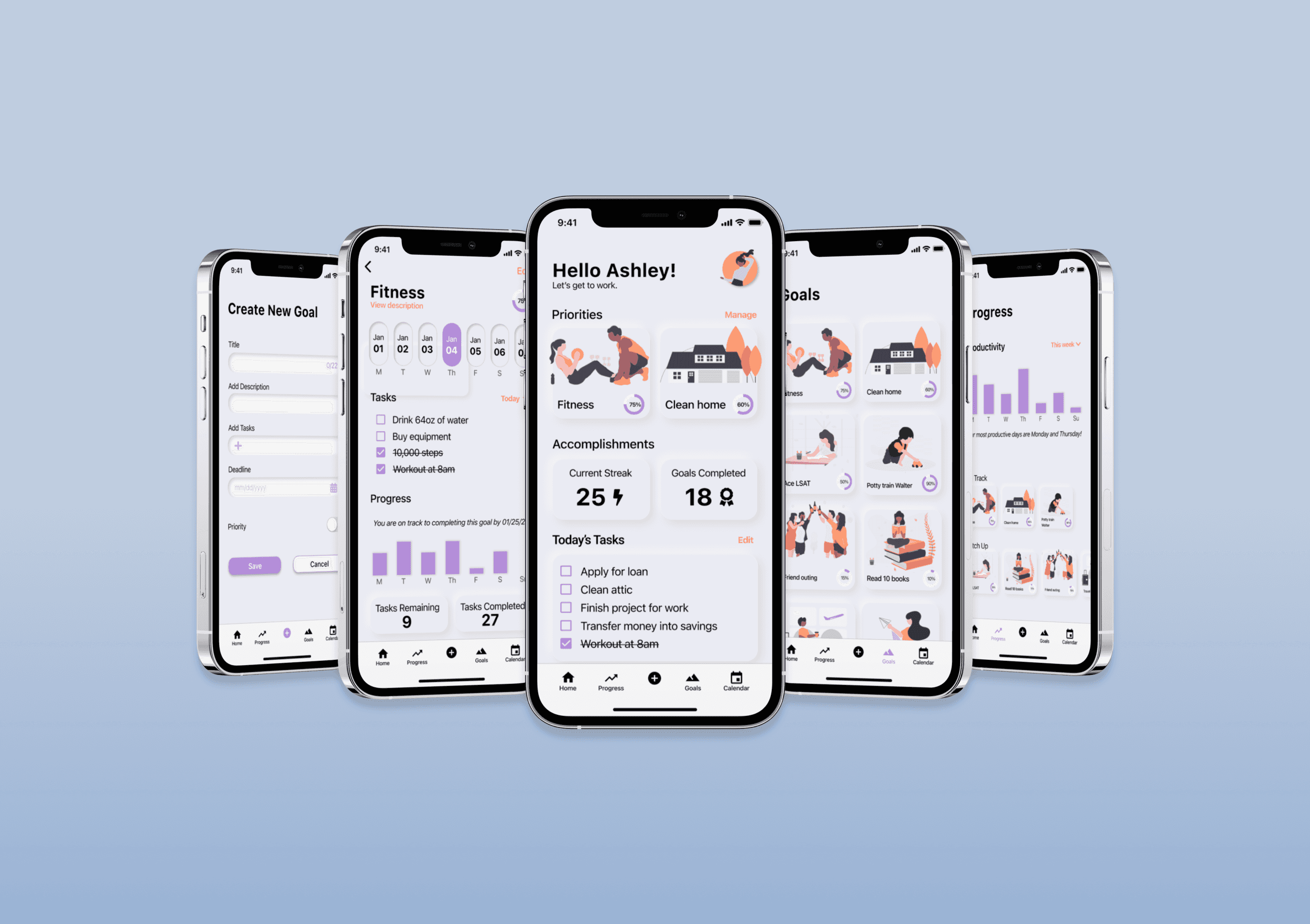
Balom is an app created to help mothers find their balance between womanhood and motherhood by organizing and prioritizing their goals.
This project took approximately 3 months.
Figma, Miro
Challenge
Mothers gain full responsibility for another human being overnight. Oftentimes, this means they begin to neglect themselves mentally, physically, and emotionally.
Goal
empower mothers
easily identify when neglecting self-needs
prioritize and manage time
Process

Understanding the Problem
Screener Survey
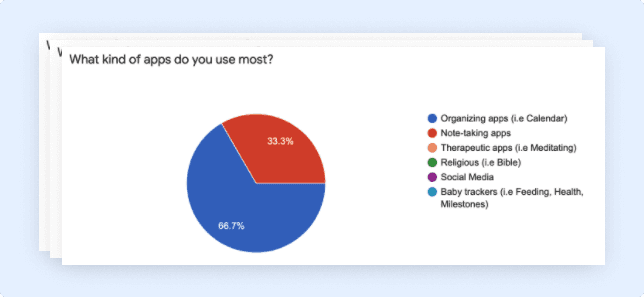
I began with a screener survey to search for the right participants who can help with understanding the problem. It was really important that I conducted interviews with participants who will help me to collect viable data and that was:
mothers between 18-40 years old
has child(ren) under the age of 5
who owns a smartphone
Diary Study
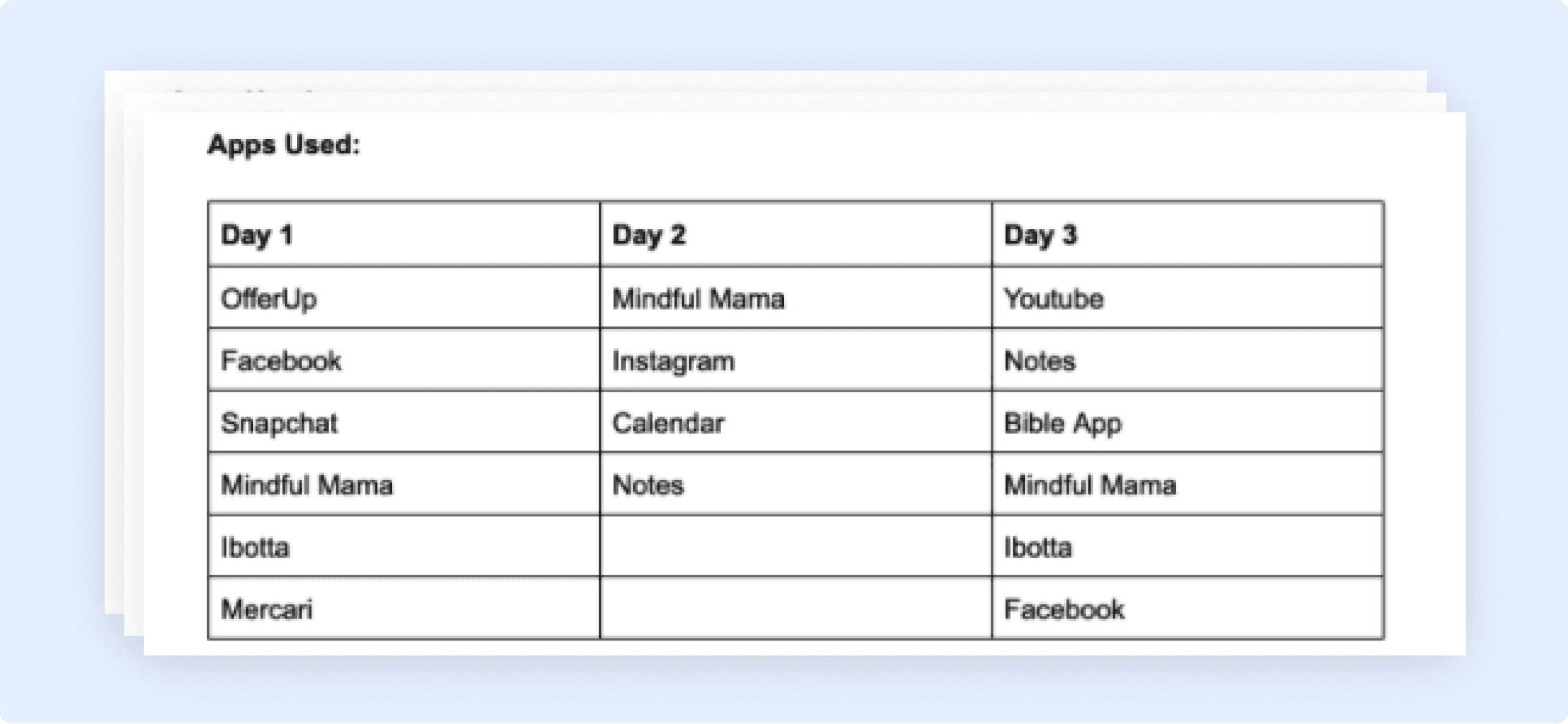
Then the users participated in a 3-day diary study to capture their natural behavior. Mothers were asked to keep track of every app they used on their phone for the next 3 days. The goal of the study was to:
understand how they spent their time on the phone
see what apps they gravitated to most
I found that the most used apps aside from social media included apps for organizational, health, and e-commerce.mothers between 18-40 years old
has child(ren) under the age of 5
who owns a smartphone
User Interviews
Lastly, I conduct 3 user interviews after the diary study to understand the “why” behind their most-used apps, specifically, the organizational apps. The interviews took place over FaceTime and Zoom for approximately 30 minutes each.
Key Findings:
I found that mothers use the organization apps as a reminder, to be held accountable and/or to get a feeling of accomplishment when they can check something off of their to-do list.
Analysis
Affinity Map
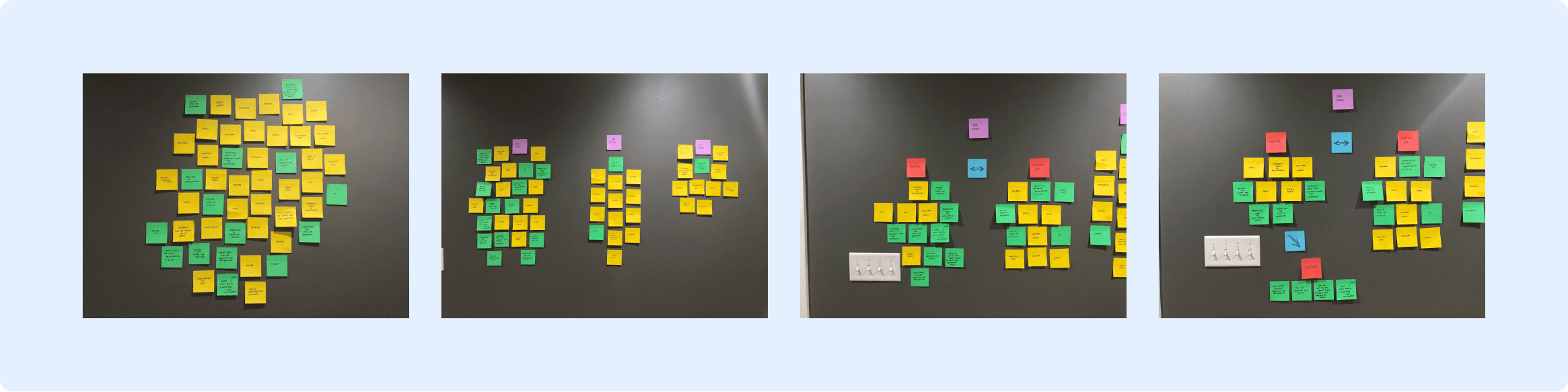
I conducted an affinity mapping exercise to surface several key issues regarding motherhood common amongst the participants. This helped me draw out themes and patterns from my research. I organized the post-its into 3 different categories: mom, baby, and both. Then I divided the “mom” category into three separate categories: mental, emotional, and everyday life. This allowed me to see how mothers are using certain apps to help them navigate through their daily lives.
Empathy Map
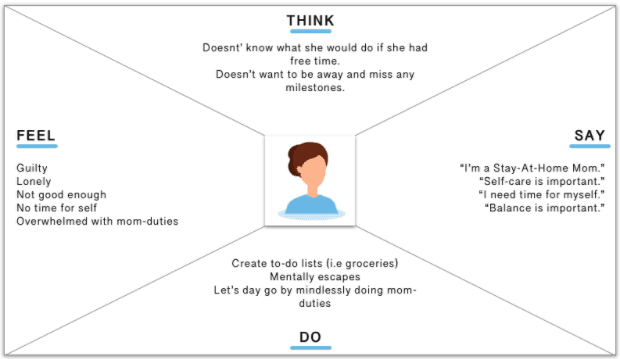
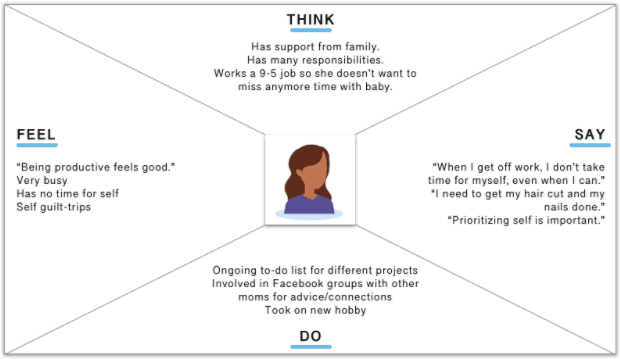
I created two empathy maps to organize insights, observations, and quotes from the user interviews to better understand the mothers’ pain points, goals, feelings, thoughts, and behaviors. It helped me realized what users think, say, do and feel can be different.
User Personas
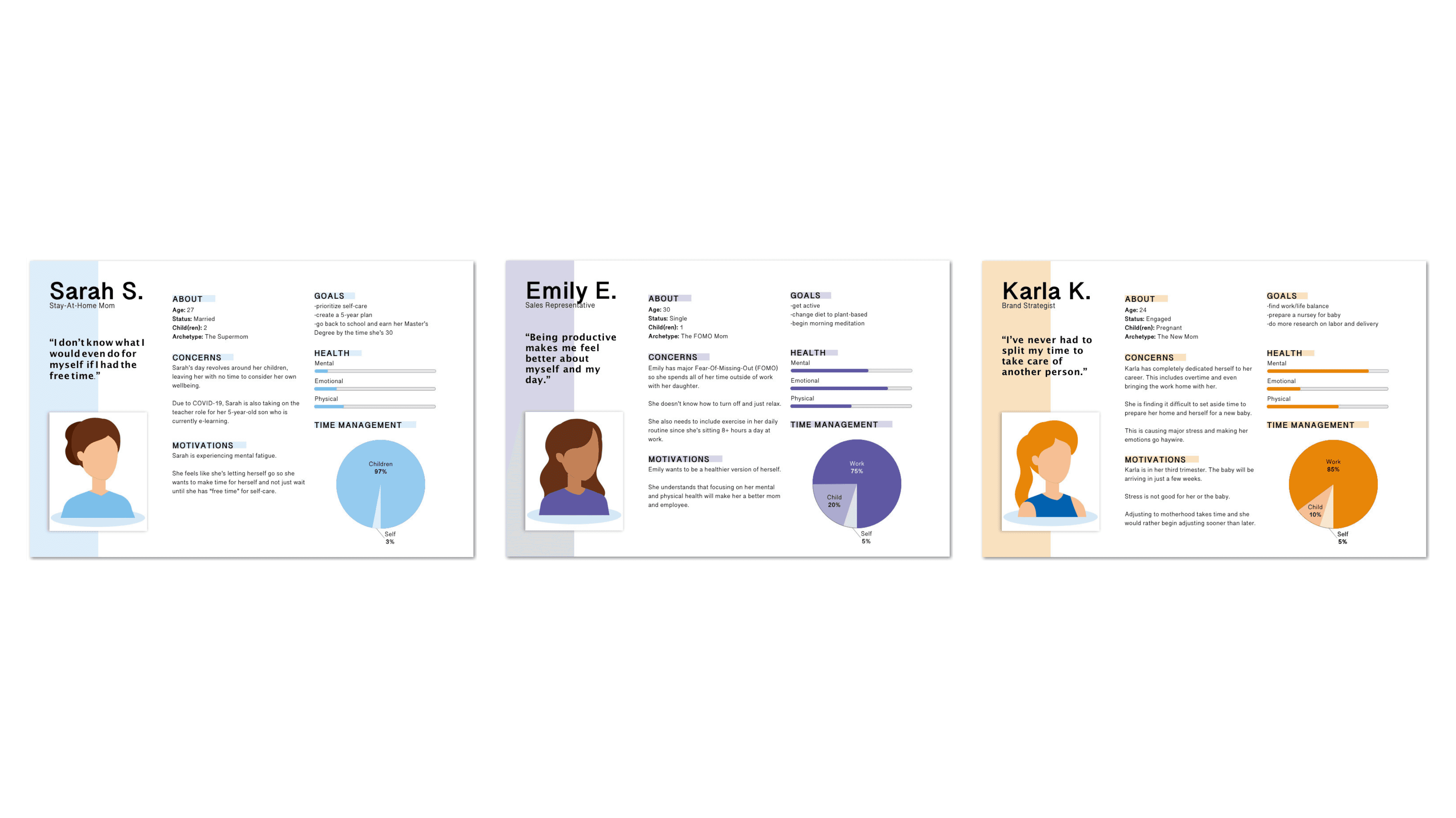
Based on my research, I recognized that there were 3 key user types that Balom can help:
a stay-at-home mother who needs motivation
a working mother who needs prioritization
an expecting mother who needs balance
I used the personas to stay focused on the mothers' needs throughout the design process.
Reframing the Problem
After listening to the mothers, I concluded that these are the top frustrations:
Lack of prioritization. Mothers are often the backbone of their families. Everyone else's needs are the top priority which leaves little room for their own needs to be met.
Lack of motivation. After a full day of being a mother, it was challenging to muster up the motivation to do anything productive towards their own goals.
Lack of balance. Mothers were always busy but never busy doing something for themselves. Neglecting their own self-care and needs took a toll on their self-esteem and they began to feel less like themselves.
"How Might We…”
With the problem defined, I wanted to keep the problems I'd be tackling in the forefront so I created "How might we" statements to constantly refer back to throughout the ideation design process.
How might we help mothers prioritize their overall health?
How might we help mothers find a balance between caring for themselves and their families?
How might we support mothers through postpartum?
How might we increase productivity and organization in a mother’s daily routine?
Competitive Analysis
Now that I understand that mothers are looking for accountability and a sense of accomplishment, I began researching apps with a similar concept on the market. I found that there was not a distinctive difference between apps in support of mothers as an individual and mothers as a caretaker. Many apps that were advertised as support for mothers were in fact baby apps like baby trackers or informational apps on caring for a baby. Though this is tremendous help, I decided to do more research on apps that were geared more towards mothers as individuals.
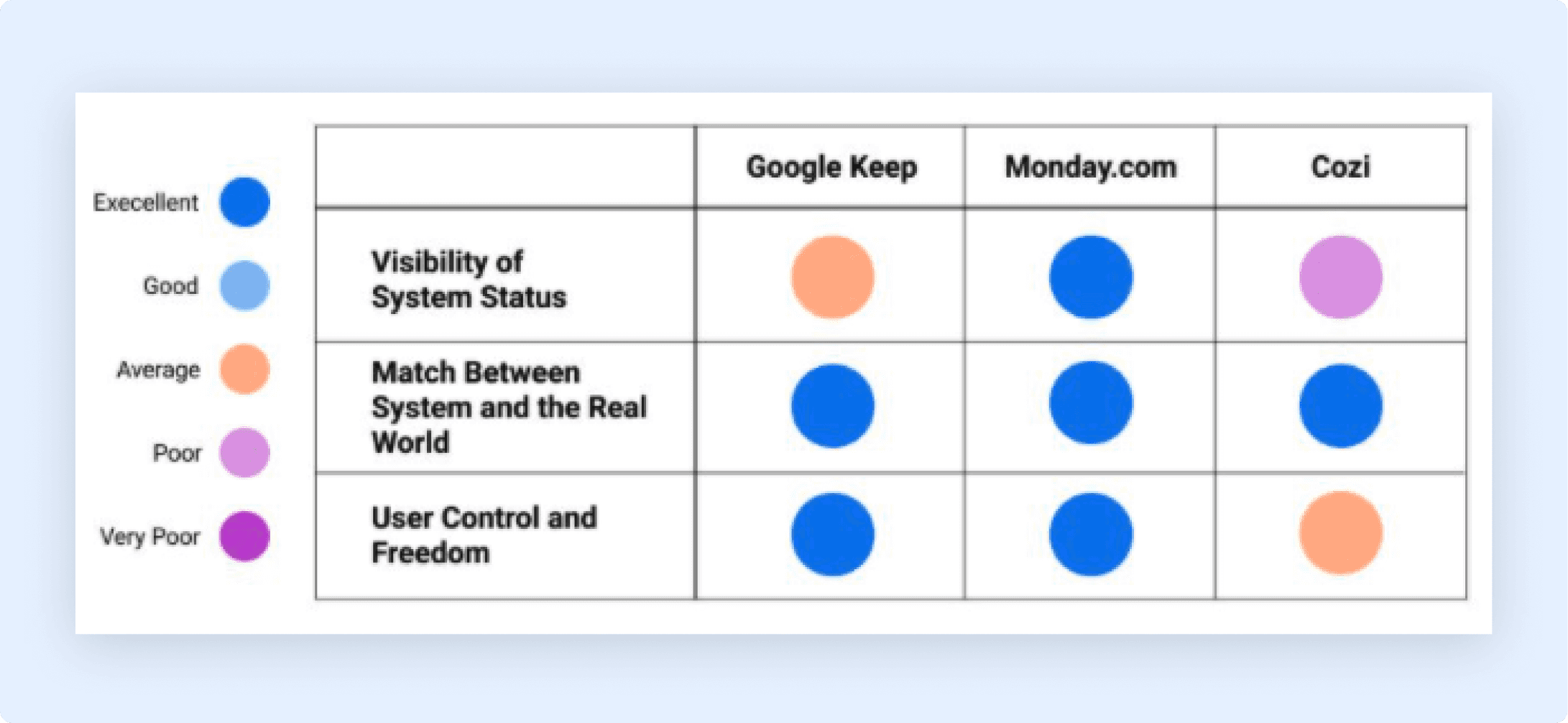
I decided to take a deeper look at these three competitors: Google Keep, Monday.com, and Cozi.
Heuristic Evaluations
I focused on three heuristics from Nielsen Norman Group’s “10 Usability Heuristics for User Interface Design”:
Visibility of System Status
Match Between System and the Real World
User Control and Freedom
Comparing similar platforms allowed me to identify their strengths and weaknesses to see what I could implement or where improvements could be made.
Ideate
Brainstorm
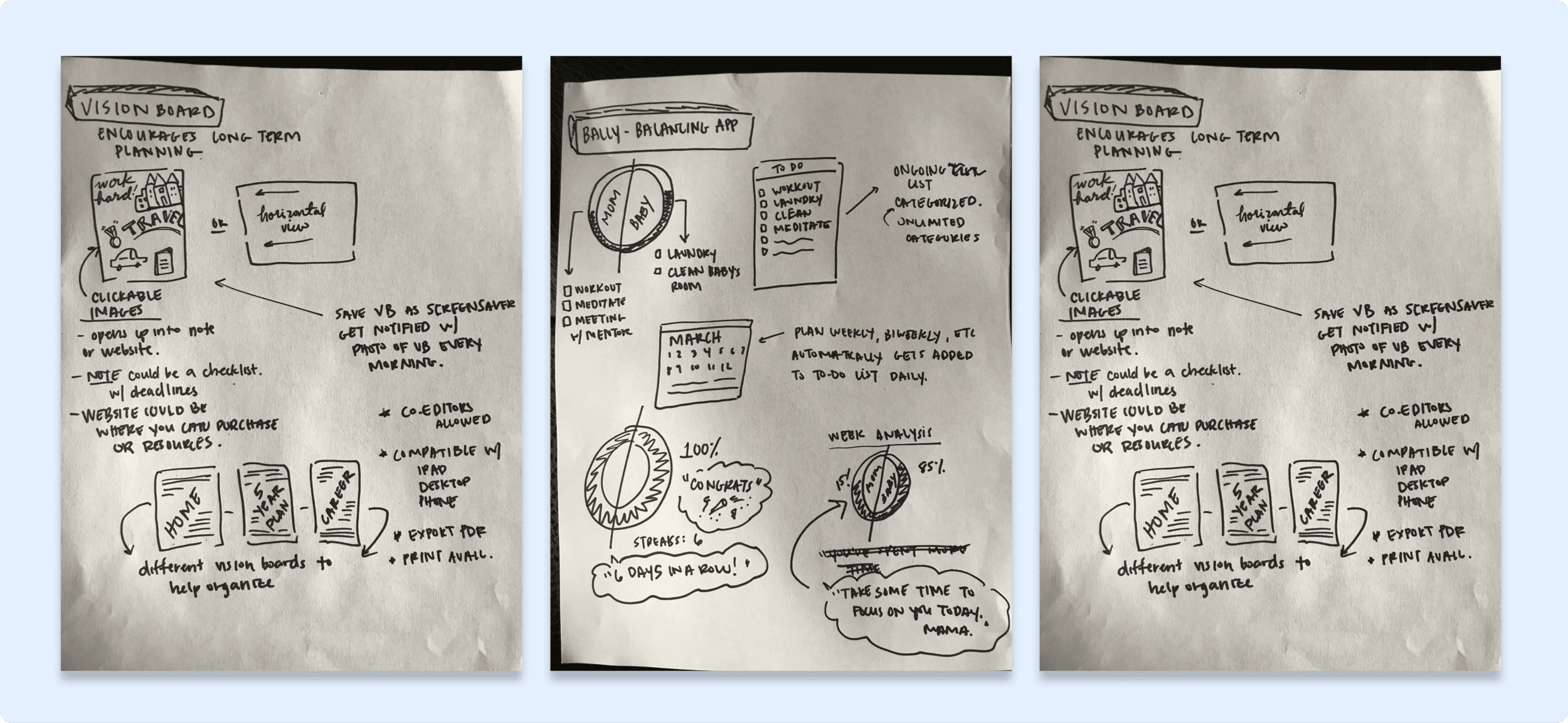
I began to brainstorm possible solutions before sketching the actual UI design screens. The brainstorming process allowed me to focus on a solution and not the details in the designs. With the research and competitive analysis in mind, I came up with 3 ideas:
An app that holds you accountable by making your goals public amongst friends
An app that is a digital vision board for motivational purposes
An app that helps with balance by visibly showing when a user isn't balancing their time between different goals
Sketches
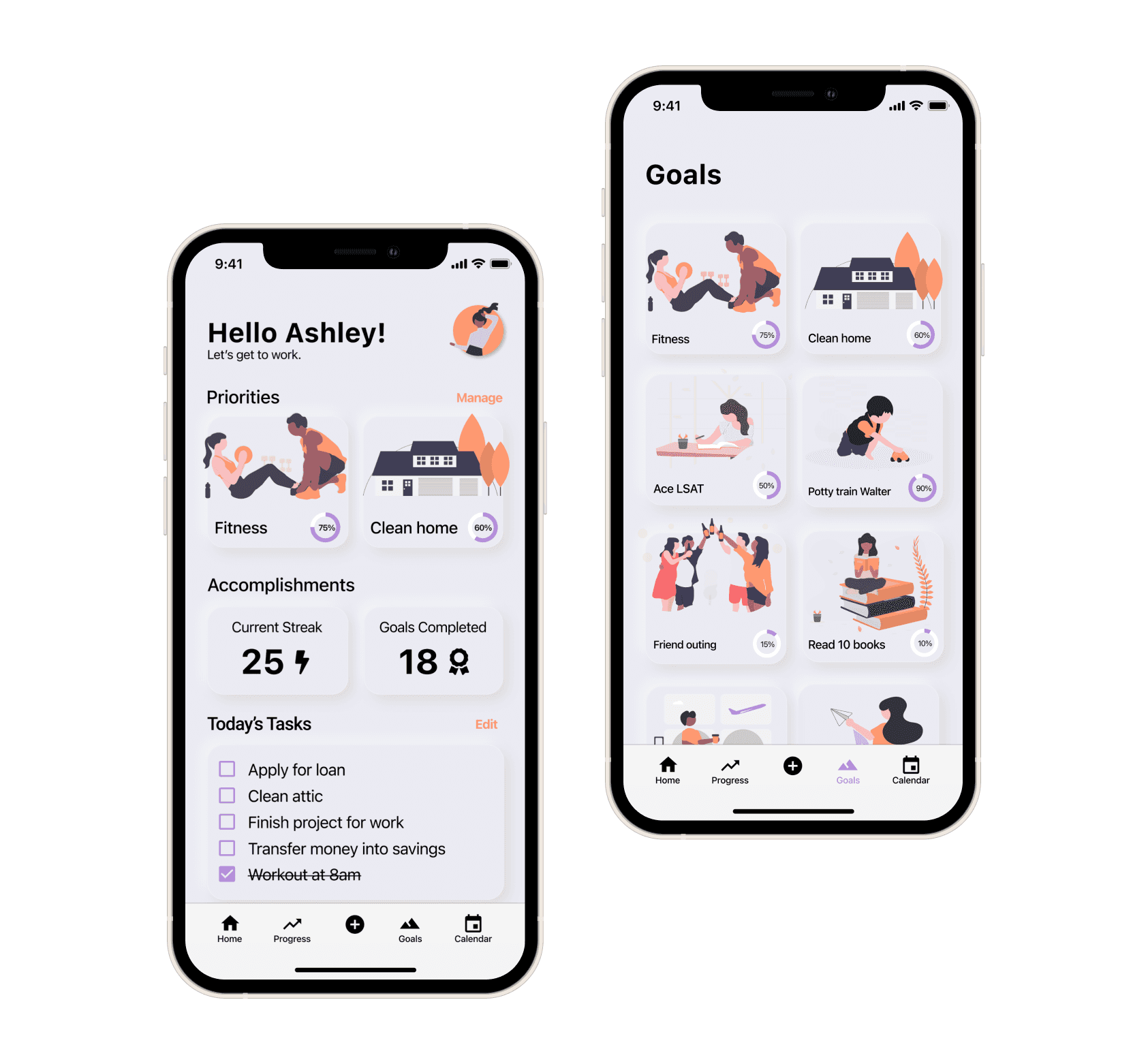
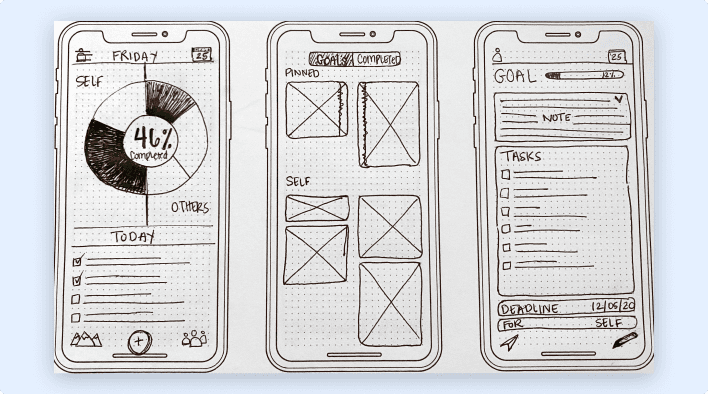
I proceeded with the idea of an app that helps with balance by visibly showing when a user isn’t balancing their time between different goals. I sketched out the first iteration of screen designs. Here are key features/ideas behind the designs:
An app that holds you accountable by making your goals public amongst friends.
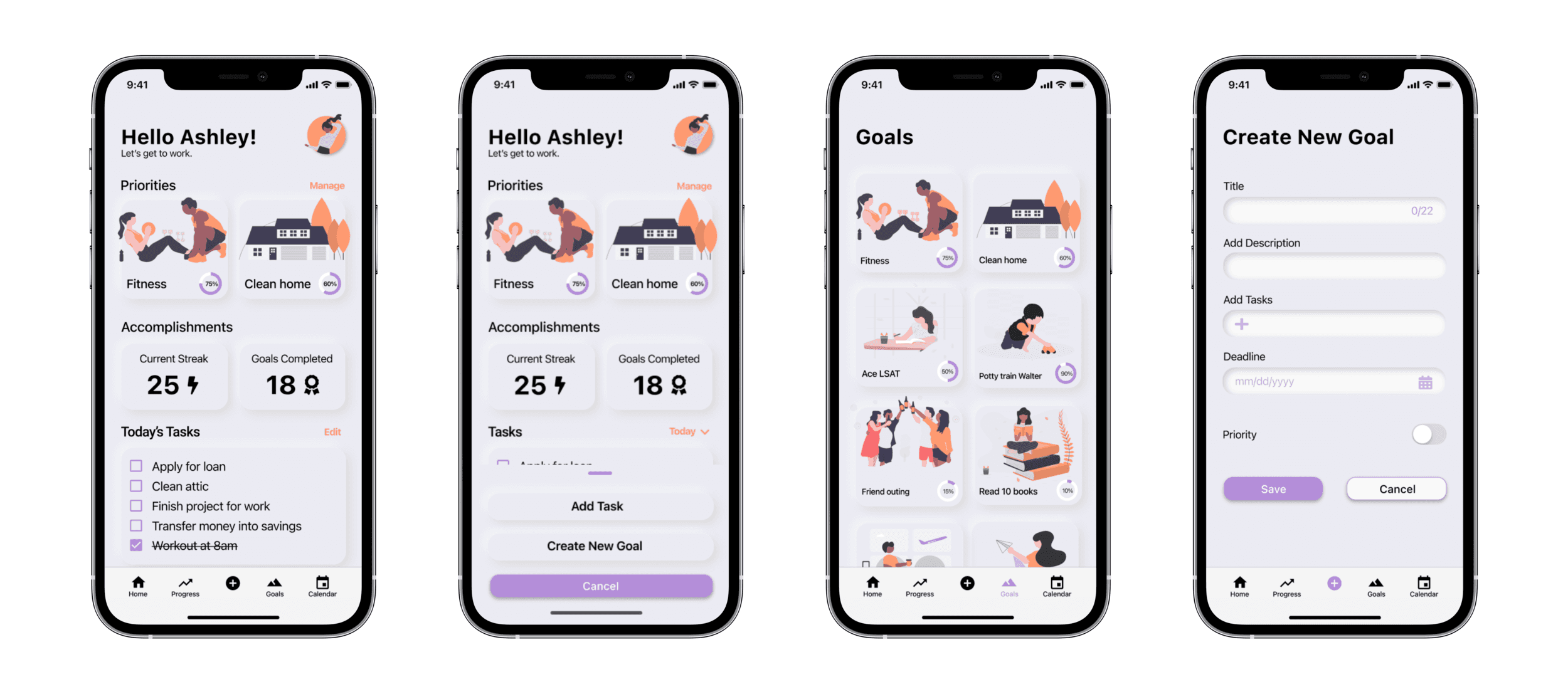
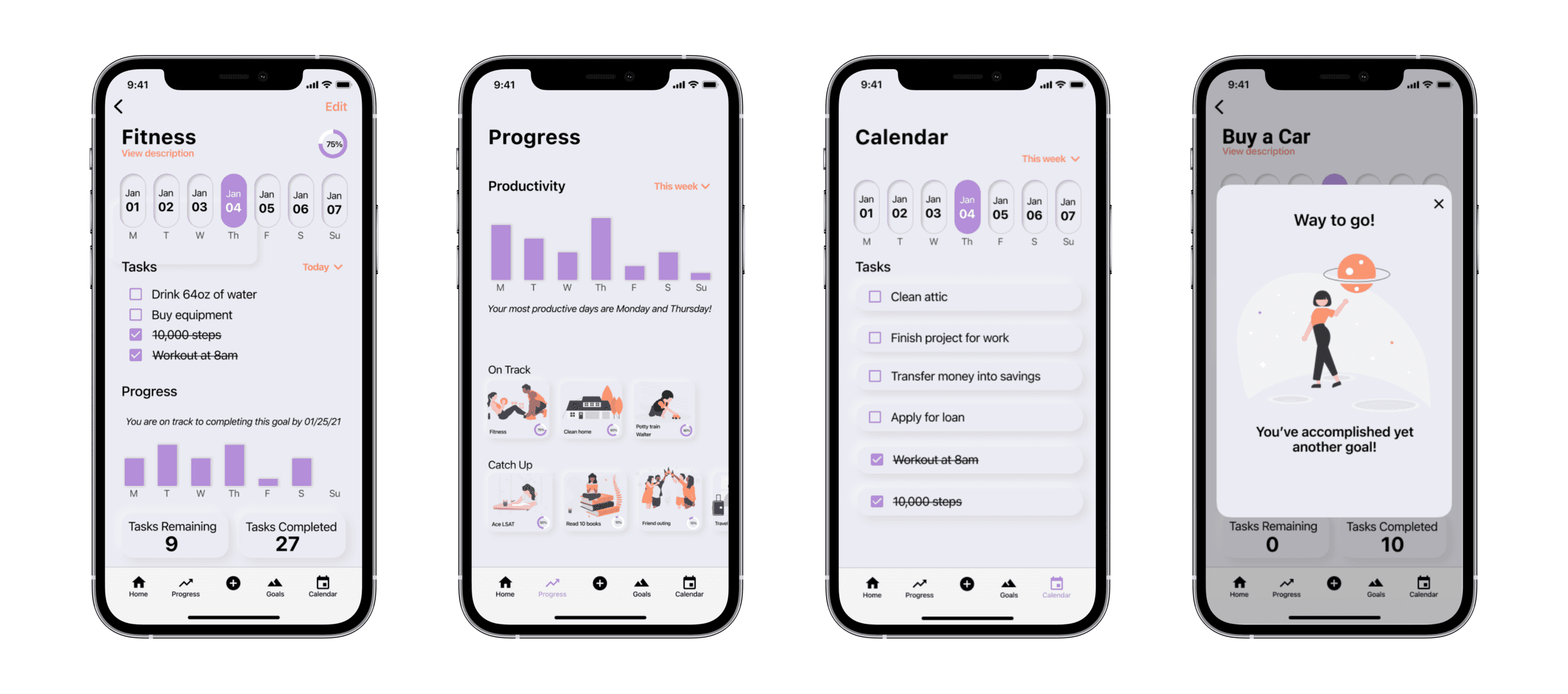
Gamification: designed to encourage the release of Dopamine, the feel-good hormone, in the brain with multiple visual cues as positive reinforcement for small or large task completions. The progress pie, accomplishment trackers, and analysis are all positive reward reinforcements nurturing a mother's motivation and productivity.
“Self” Section: this designated section is a visual cue for the user to exercise self-care
Checklist-style: the tasks are organized in a checklist to make each goal more attainable, especially for the users who feel overwhelmed
Information Architecture
Sitemap
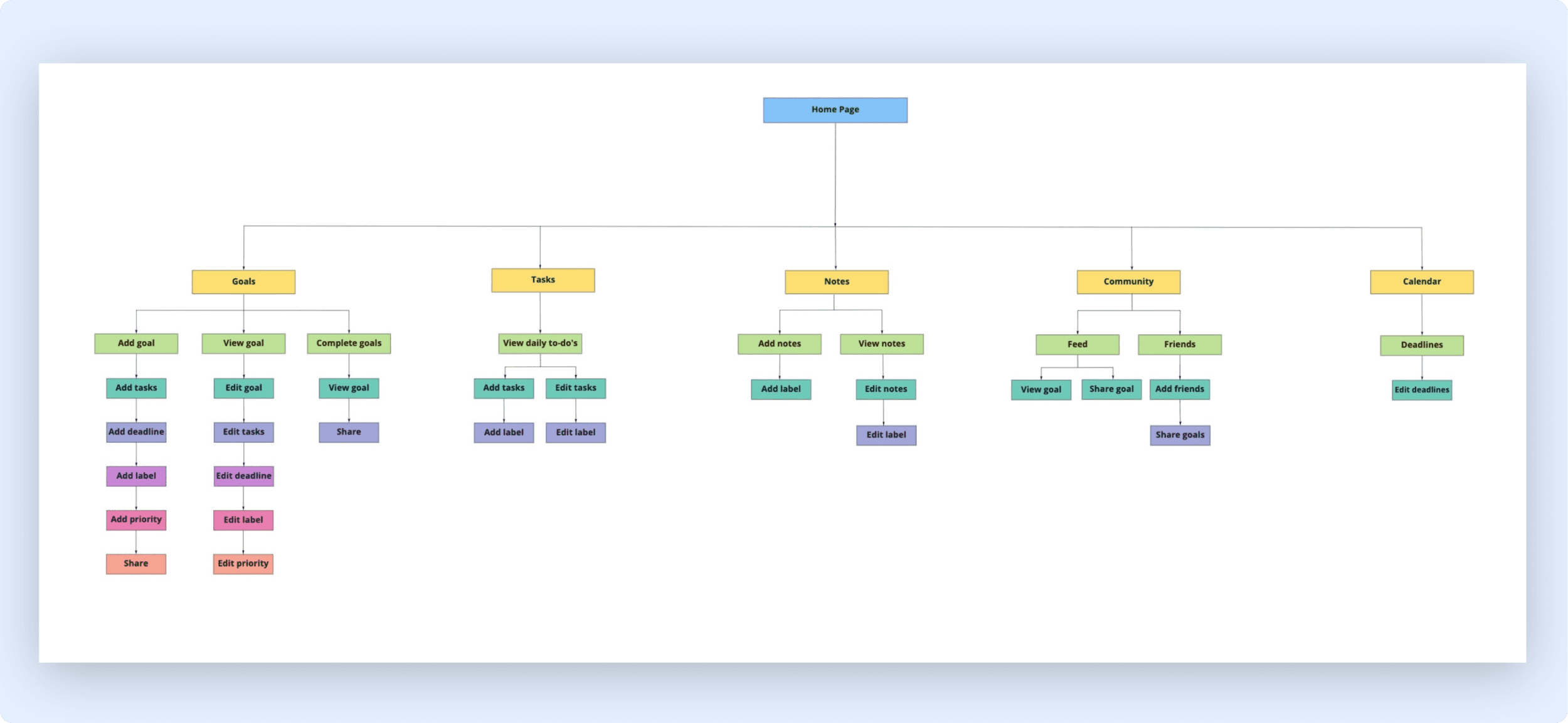
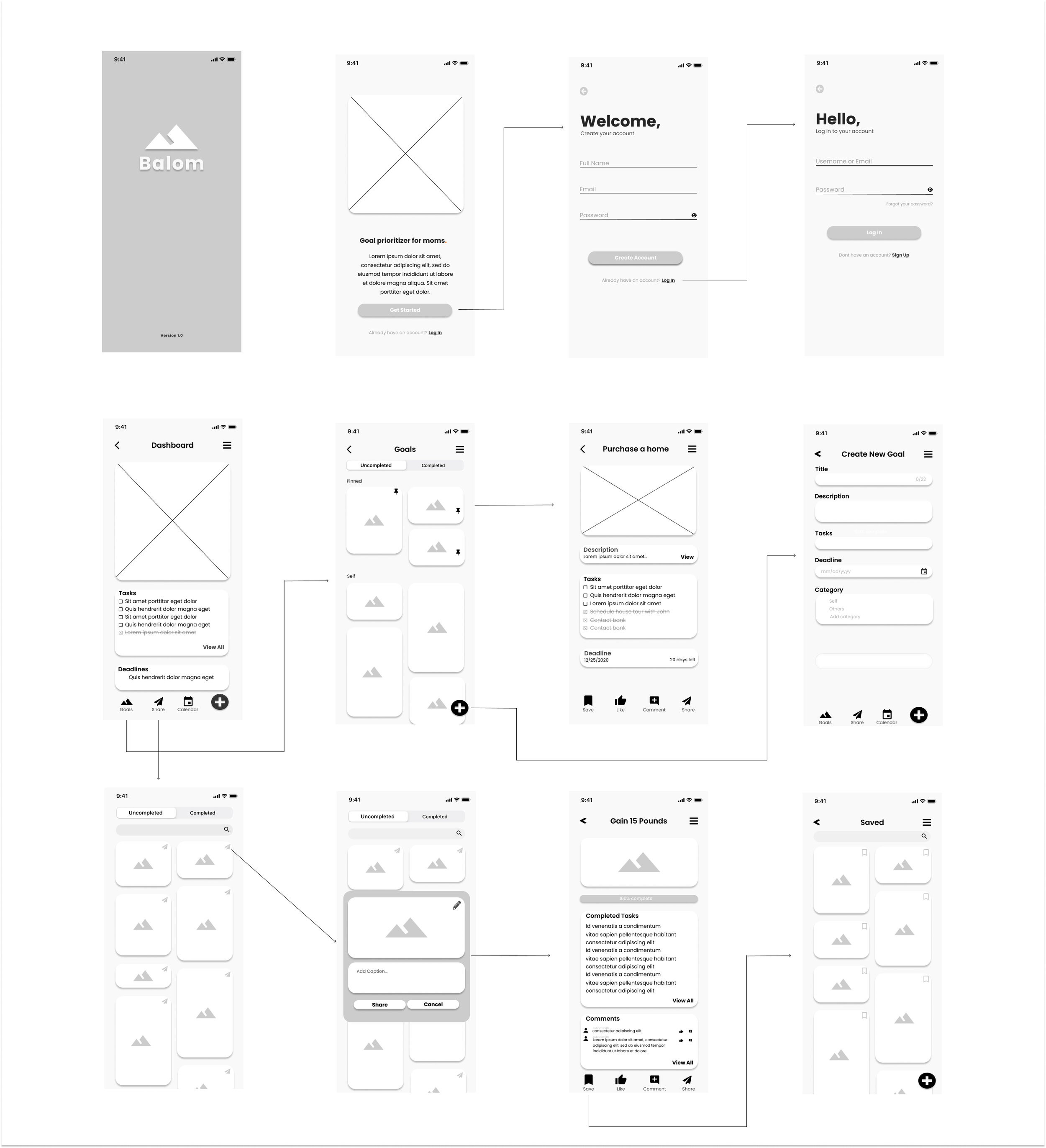
The sketches allowed me to visualize the features I wanted to include in the app. I was able to create a detailed sitemap using Miro to serve as the guidance to design the user flow.
User Flows
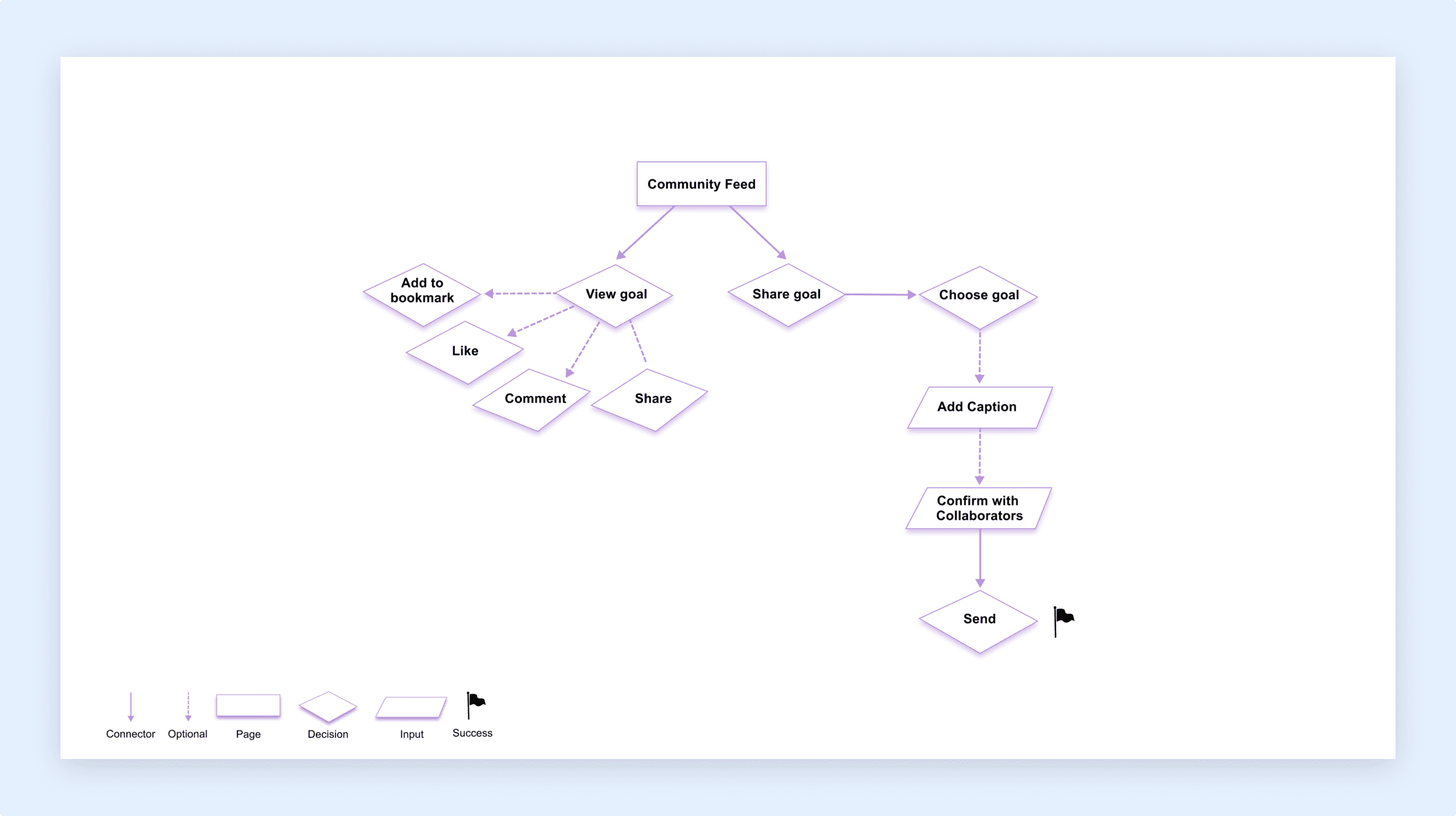
User Flow 1: Community Feed
Scenario 1: existing user views a goal and can interact with it by saving, liking, commenting, or sharing it
Scenario 2: existing user wants to choose a collaborator to share a goal with
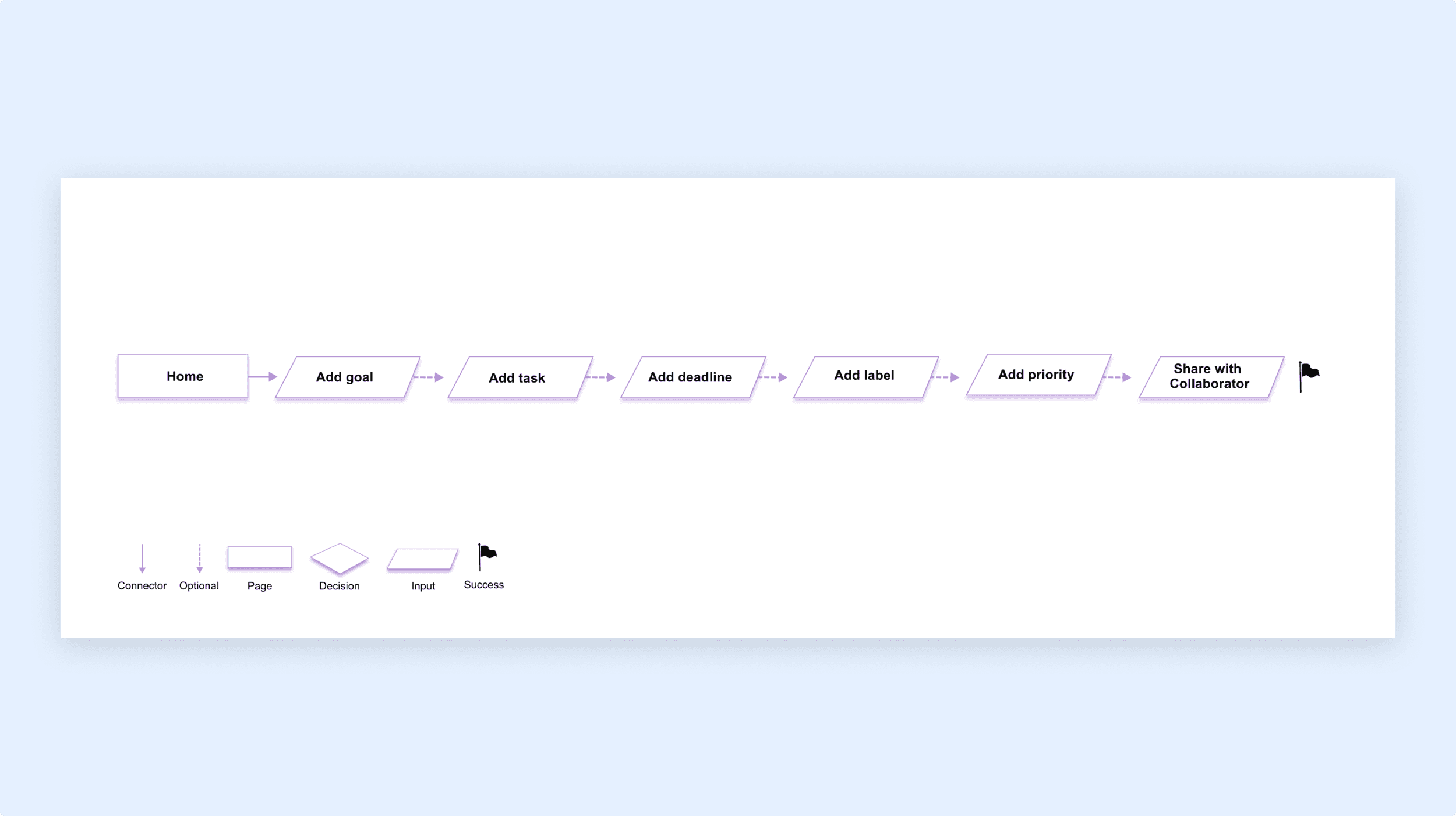
User flow 2: Dashboard
Scenario 1: existing user creates a new goal
Designs
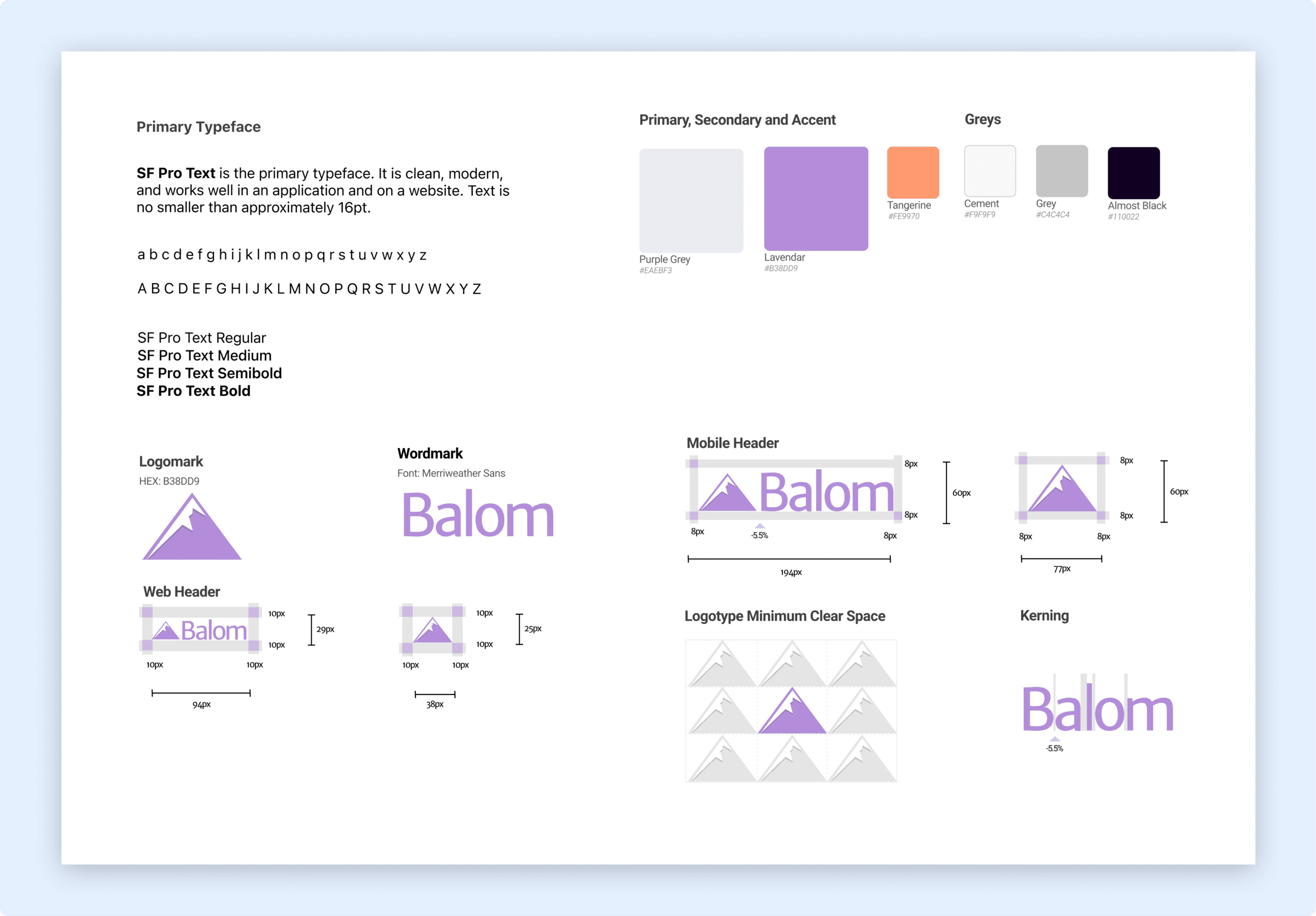
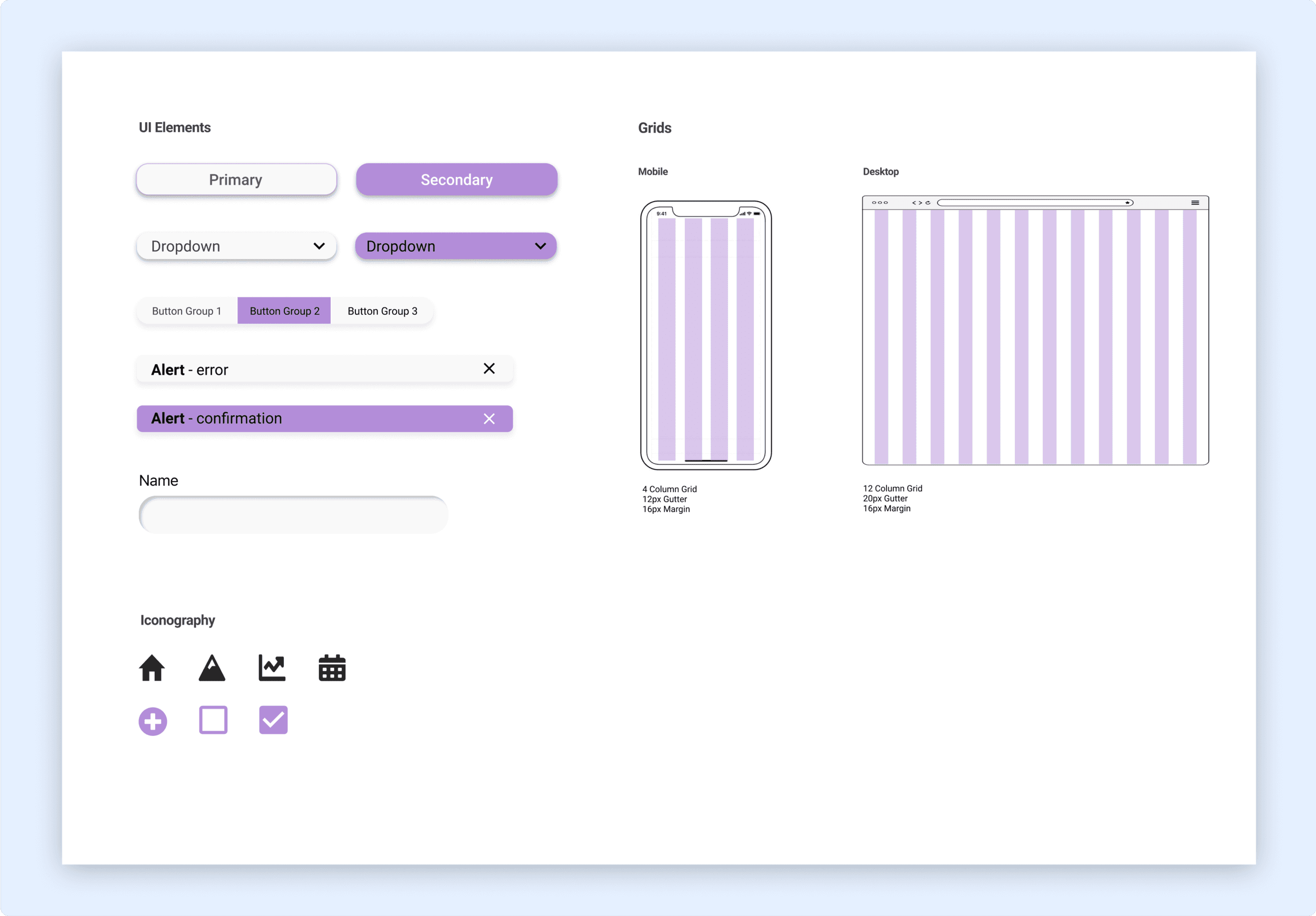
Branding Guide
Mid-Fidelity Wireframes
Usability Testing & A New Direction
I conducted 5 separate usability testing via Zoom to test the ideas. They were tasked with navigating through the app checking the home, analysis, calendar, and goals page. Here are my key findings:
The homepage can be overwhelming
Labels weren’t intuitive (ex: Analysis page)
Need more gamification elements
I took the findings from this usability test and iterated on my designs.
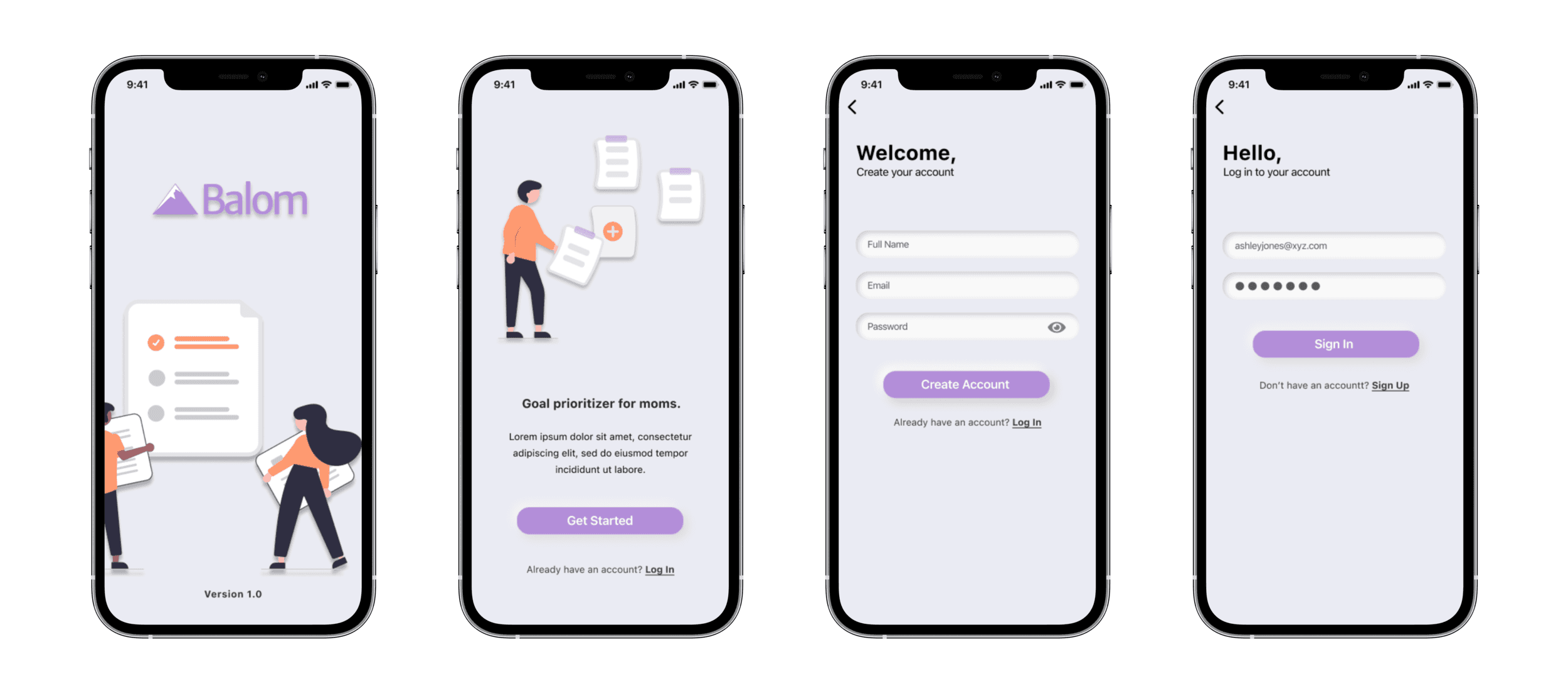
High-Fidelity Screen Designs
Usability Testing Results
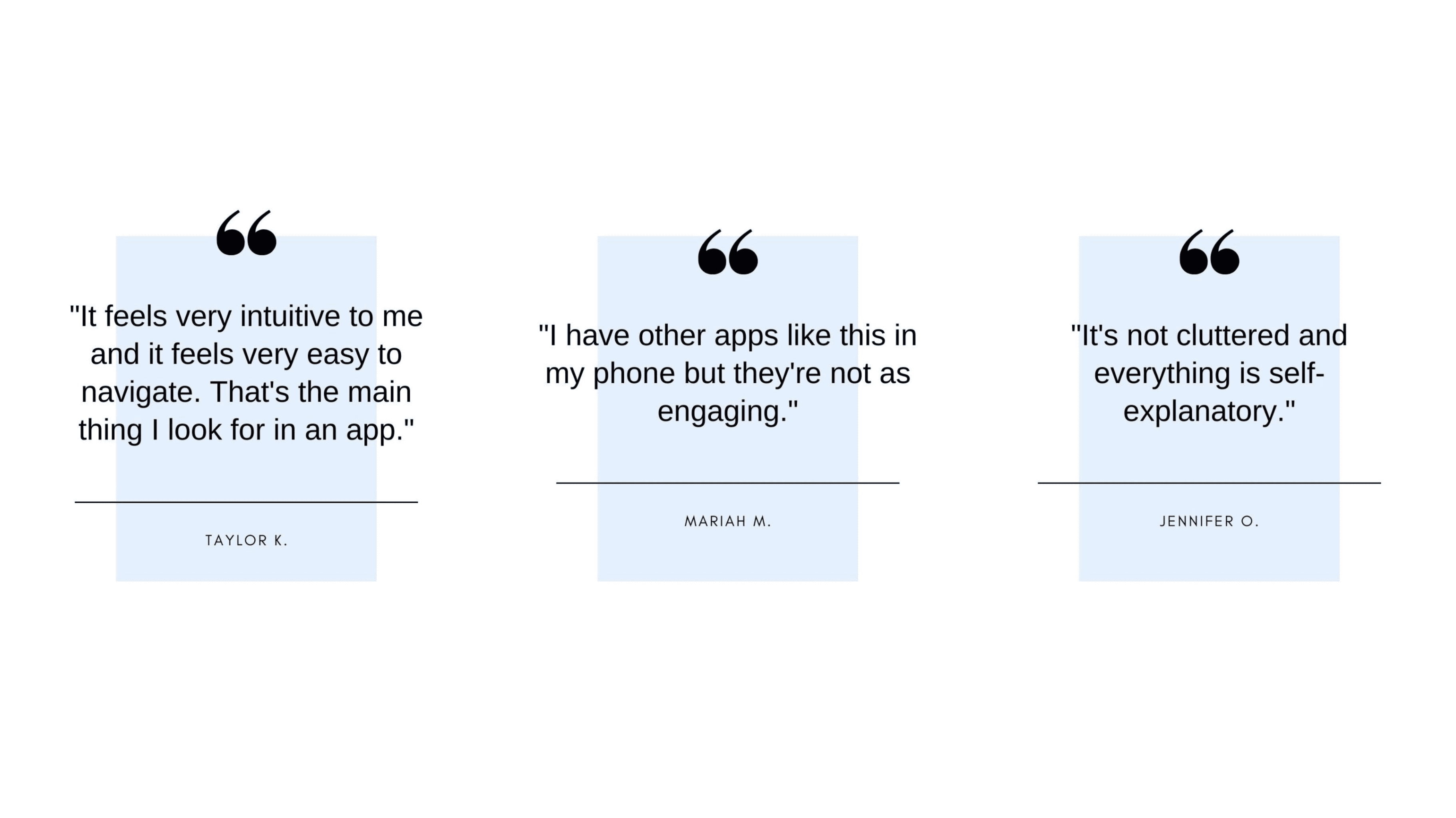
The setup of this usability testing was the same as the first one. Below are quotes from users in the final round of testing:
Final Prototype
View interactive prototype in Figma.
Reflection
I was excited to take on a project centered on solving real problems for mothers. Balom felt like the right opportunity to deepen my user research and interview skills, especially because I could personally relate to the challenge. Some parts of the process came naturally, while others pushed me to grow. One of my favorite challenges was experimenting with neumorphism for the first time while still keeping the interface clean and minimal.
I truly enjoyed working on this project from start to finish, and I hope that experience comes through as you review the case study. I welcome any feedback or suggestions and would love to continue the conversation in the comments. Thank you for taking the time to read.
Special thanks to the usability testers who made this project stronger: Jennifer On, Christina Phuong, Mariah Matthews, Taylor King, Marissa Roberson, Brea Thompson, and Kyra Grant.